There is a design flaw in the way we prepare men for life.
The first part is fairly straightforward; we go to school, navigate puberty, form friendship groups, get the qualifications and careers, society approves and we're off. Then it's the more grown up part of relationships, starting families, promotions, mortgages as we strive for bigger and better things.
Then midlife just arrives. Unannounced. Without a map.
I'm not talking about the midlife male that has become a parody of the sports car and hair transplant. This is the real version and the one that does not get spoken about nearly enough. Things slow down, the career progression plateaus, family life becomes more settled as children find their independence and the social life becomes dinner parties rather than weekend benders.
Working behind the scenes, there are factors at play that change everything. You're still the same man, but somehow different. Midlife, if you are willing to look at it honestly, turns out to be considerably more interesting than anyone told you it would be.
I'm 52 years old and I've been through it. I built the Midlife Map because when I was in the middle of it, I looked everywhere; books, articles, podcasts, and found nothing that described what I was actually going through, or how I was going to get through it.
There was nothing that explained everything, so I wrote it.
It starts with a feeling
If you're in midlife, you know the feeling. You might not have named it yet.
It's not unhappiness exactly. It's certainly not a crisis. I understand why the word came about; a crisis implies something we're unprepared for, something that hits without warning and leaves us not knowing what to do. More like a slow puncture that has been losing air for a while, and one morning you wake up and realise the tyre is flat. Somewhere underneath all of it, a quiet voice asks a question you are almost ashamed to admit you are asking.
"Is this it?"
We don't say it out loud. We don't feel we have a right to. Because we have nice lives. Good jobs. Our kids are doing well. There is a lot to be thankful for. So we keep going. We perform. When someone asks how it's going, the answer is probably 'I'm fine'.
But underneath it, you know that you're not.
I remember waking up on several mornings and saying to my partner at the time: 'I just want to wake up happy again'. That sense of excitement that carried me through my late thirties and forties had vanished almost overnight. It wasn't quite anxiety. But there was something, an unsettling feeling about what the day would bring. A quiet reckoning with the gap between where I was and where I thought I would be by now.
That feeling isn't weakness. It's a signal. And it has a name.
At the core, it's identity
Go deeper than the feeling and this is what you find underneath. Your identity is shifting.
The identity you built in the first half of your life, through your career, your roles, your relationships, your achievements, starts to feel like it no longer fits. The labels are still there on paper. The job title. The responsibilities. The reputation. But you find yourself comparing your current situation to your previous expectations and asking whether the life you built is actually the one you wanted.
The problem is that nobody tells us the midlife transition is coming. There is no ceremony. No one sits a man down at forty and says: something significant is happening to you. Here's what to expect. Here's how others have navigated it. Here's a map.
I have spoken to many men going through this. A PhD with a successful career, suddenly made redundant; he's happily married, has two wonderful children, and he still wakes up most mornings with a sigh before he opens his eyes. Another man, successful on paper, well known and respected, carries this underlying sense that he did not become the man he was supposed to be. It has held him back for years in ways that have nothing to do with his abilities.
These are not weak men. These are capable, intelligent men who arrived at midlife without direction. Most men do.
The cause and the trigger
Here is the part that nobody explains. And it's the most important distinction I know.
There are two things at work when a man arrives at midlife. The Cause and the Trigger. They're not the same thing. Confusing them is why men can spend years treating the wrong problem.
The Cause happens to every man. It's internal, biological, and inevitable.
Biologically, testosterone, cortisol and dopamine are shifting. The engine that drove your ambition through your twenties and thirties, the hunger, the fuel to prove yourself, is running differently now. This is physiology at work.
Psychologically, the identity you spent decades constructing has started to feel like it no longer fits. Existentially, for the first time, mortality comes into focus. You start asking not just what you want, but whether the second half of your life is going to mean something. Socially, your circle shrinks and the connections that felt solid quietly thin out.
Economists Blanchflower and Oswald developed 'The Happiness Curve' which tracked life satisfaction across dozens of countries and found the same U shape everywhere, bottoming out around 47 years old in the developed world before turning upward again. This is happening to you whether you can name it or not.
The Trigger is different. The Trigger might be your story. A relationship ending. A job that stops meaning what it used to or disappears. Bereavement. A health scare. Children leaving home.
For me, they all arrived at once. I lost my job. My relationship ended. My children left home. And my father had died a few years earlier, at sixty-six. When all of that happened, I spent years believing it was the cause of what I was feeling. That was my ego talking. The story I told myself to understand. The internal truth was harder and more interesting.
The Trigger feels like the problem because it's the thing you can point at. But remove the Trigger and the Cause is still there. That's why men who change jobs or end relationships looking for relief so often find the same feeling waiting for them on the other side. They treated the symptom and left the cause untouched.
When Cause and Trigger land at the same time, the internal shift already running and a significant external event on top, that is the Collision. And that's when it gets loud.
The Wilderness
After the Collision comes the Wilderness.
The Wilderness is the stretch between asking "is this it" and doing something about it. It can last months. More often, it lasts years. You function. You cope. You keep going and tell no one. "I'm fine" becomes the mantra. And quietly, it gets heavier.
It doesn't always look dramatic from the outside. No breakdown or obvious crisis. Just a persistent, quiet feeling that something is off and you can't quite name it. So you drift.
Here is what most men do in the Wilderness. They try to solve it alone. Read the books. Download the app. Start a morning routine that lasts a few days. It's hardwired in. The same instinct that stops a man asking for directions or reading an instruction manual. Underneath it all, you just don't want to be a burden.
When I was going through it, people wanted to help. So you find yourself in conversations, over a pint, because that is the approved British format for emotional disclosure. A friend listens, nods thoughtfully, and offers some well-meaning advice. Somewhere during the second pint, the conversation moves on to football. I call this the two-beer attention span. What it taught me was the most important realisation of my adult life: no one is coming to save you.
That sounds bleak, but it isn't. It is the most liberating thing I have ever understood. Because the moment you stop waiting for rescue, you take ownership. And ownership is where everything interesting begins.
Most men live in the Wilderness far longer than they need to. The longer the wait, the deeper the hole.
The Fork
At some point, every man hits the same moment. A fork in the road.
He goes left and this is the trap. Where the enemies of midlife reveal themselves. The ego keeping you stuck, telling you it will pass, trying to keep you safe by not changing. The ego will always choose a familiar hell over an unfamiliar heaven. The stigma of asking for help. The isolation and loneliness that follow. All of these contribute to the shocking statistics on men's mental health we are all too familiar with.
Or he goes right. He stops pretending the feeling is not there. He starts to understand what is actually happening and faces it rather than running from it.
"The impediment to action advances action. What stands in the way becomes the way."Marcus Aurelius
Going right is harder, but it's the only path that leads anywhere worth going.
The path through: Descent, Ownership, Emergence
Having arrived at The Fork myself, I built the right path around three stages. Descent. Ownership. Emergence. Together they form the Midlife Map, a structured framework for men ready to move through this transition.
Descent is where the work starts. No coach ever looked at a team struggling at half-time and said: just get out there and give it more of the same. Descent is the half-time analysis. An honest look at the first half, the identity built, the beliefs accumulated, the parts of yourself you have been avoiding. The guilt, the shame, the fear we all carry but never face. The things that have been showing up for years as self-sabotage, impostor syndrome, procrastination, and overwhelm. Until you face them, they keep driving. As Carl Jung put it: until you make the unconscious conscious, it will direct your life and you will call it fate. Descent is making it conscious.
Ownership is where the real work happens. This is structured, deliberate work on understanding who you actually are now, what you want, and how to build toward it. Your beliefs, conscious and subconscious, are the foundation everything else rests on. Relationships. Career. Family. Finances. Health. If the foundation is weak, everything built on top of it shifts. Ownership is rebuilding the foundation.
Emergence is the second half. This is the new identity driving purpose. Not back to who you were, forward to who you were meant to be.
In 'The Second Mountain', David Brooks writes about two mountains in every life. In my experience, and in the men I have worked with, reaching the summit of the first mountain rarely delivers what was promised. The achievement, the titles, the status don't carry the fulfilment and meaning you expected to find there. They prove you can climb. They do not tell you why it was worth climbing. The valley between the two is not a crisis. It's the start of the second phase.
Midlife is the moment you see it.
The Japanese have a concept called Kintsugi, the art of repairing broken pottery with gold. The cracks are not hidden. They become the most valuable part. That is Emergence. The man who comes through this process is not a restored version of the man who went in. He is something better. The gold was always there. You just needed to find it and integrate it.
How to use the map
So why does nobody tell us? It seems the first rule of midlife is, you do not talk about midlife. Partly because the men who have been through it do not talk about it and partly because there is no framework for it in medicine, education, or the workplace. The male midlife transition, which affects every man, is spoken about almost nowhere. There are no ceremonies, no conversations, no maps. Which is exactly why I built one.
Most men who arrive at midlife try motivation first. A bit of journalling here, meditation there, a new morning routine. And nothing changes. Not because they are doing it wrong, but because motivation comes and goes. It is snakes and ladders for life. You climb, you slide, you climb again.
What actually gets you to where you want to go is understanding and discipline. Knowing where you are on the map. Keeping the promises you make to yourself. Understanding you can't get there in a day.
"What youth found and must find outside, the man of life's afternoon must find within himself."Carl Jung
The man who got you to this point is not the man who is going to get you to where you need to be. But here is what you have now that you did not have in your twenties and thirties: experience, wisdom and perspective. Who would have thought? You have accumulated more than you realise. The tools you picked up along the way, the hard lessons, the things that didn't work, none of that is wasted. It's exactly what the second half runs on.
Now that we know where we're going, the job is to enjoy every step and take in the views along the way.
Nosce te ipsum. Know thyself.
The way is through.
Want to know where you are on the map? The free Hades Audit is one honest conversation about where you are, with a man who has been through it. No pressure. No script.
Book a Free Hades AuditFrequently asked
Is the midlife transition the same as a midlife crisis?
No. A crisis implies something we're unprepared for, something that hits without warning. The transition is more like a slow puncture - it happens to every man as biology, identity, mortality and social circles shift. It only becomes a crisis when it's denied and left to fester.
At what age does it start?
The research on life satisfaction bottoms out around 47 in the developed world before turning upward again. But it's triggered less by an age than by the Cause and the Trigger colliding - it can start earlier or later.
What is the Midlife Map?
A structured framework for men navigating midlife, built around three stages: Descent, Ownership and Emergence. I built it after going through the transition myself and finding nothing that described what was actually happening, or how to get through it.
What if I've been stuck in the Wilderness for years?
Most men live in the Wilderness far longer than they need to - functioning, coping, telling no one. The longer the wait, the deeper the hole. The turn comes with ownership: the moment you stop waiting for rescue and start working on it deliberately, ideally with structure and support.
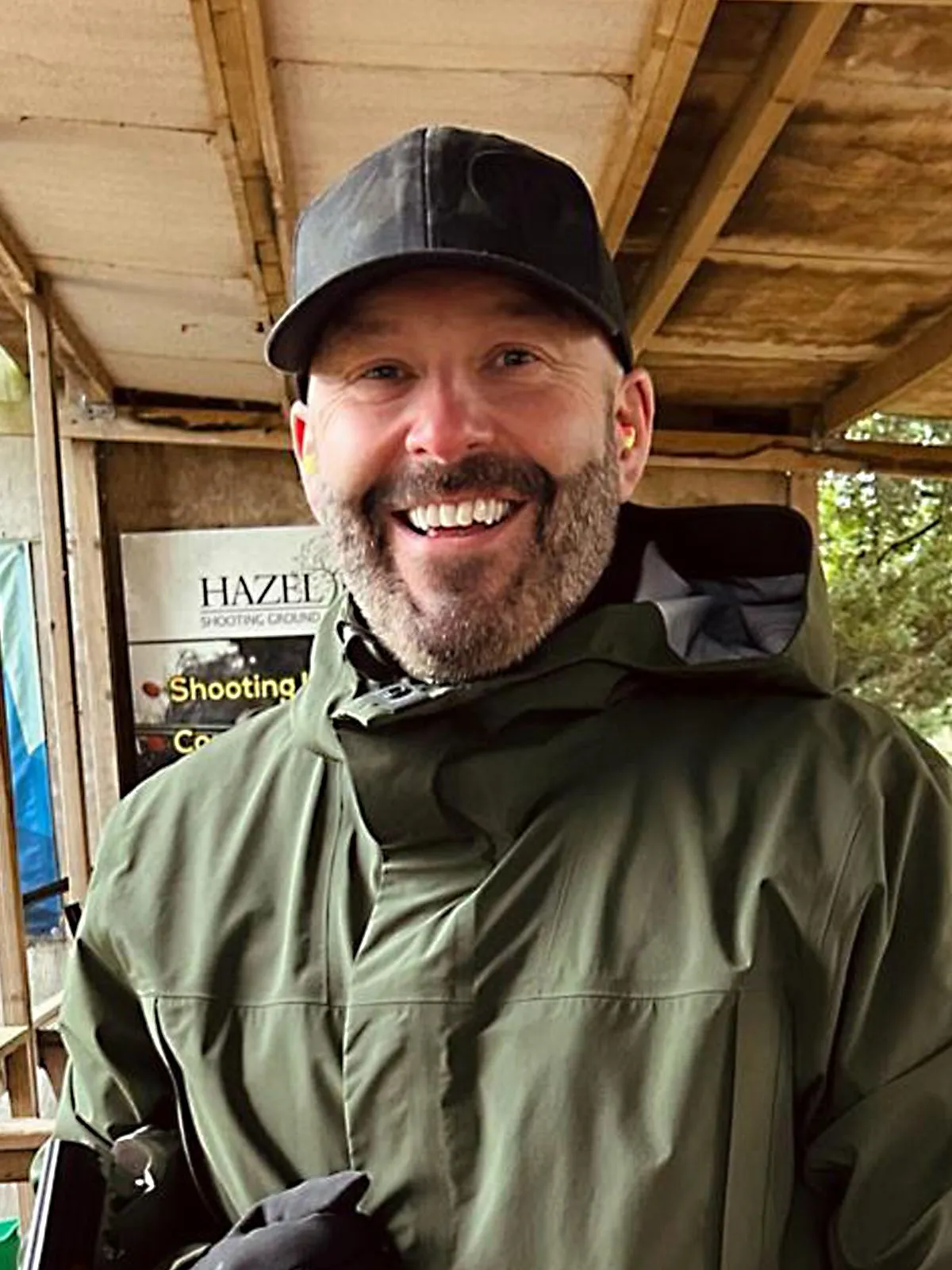
Jonathan Flynn is the founder of The Hades Effect, a coaching methodology for men navigating midlife. He is based in Harrogate and works with clients across the UK. The Midlife Map is his proprietary framework.
The Way Is Through
© Jonathan Flynn / The Hades Effect 2026. All rights reserved.